Post Frame Building Cold Climate Builder
Building a Post-Frame Structure That Can Handle a Harsh Winter
Around here, winter isn’t a suggestion—it’s a reality. When you’re putting up a new shop, barn, or home, you need it built to last through heavy snow, freezing temps, and everything in between. A post-frame building is a fantastic choice for our climate, but only if it’s designed and built right from the ground up. It’s not about getting it done fast; it’s about getting it done right the first time.
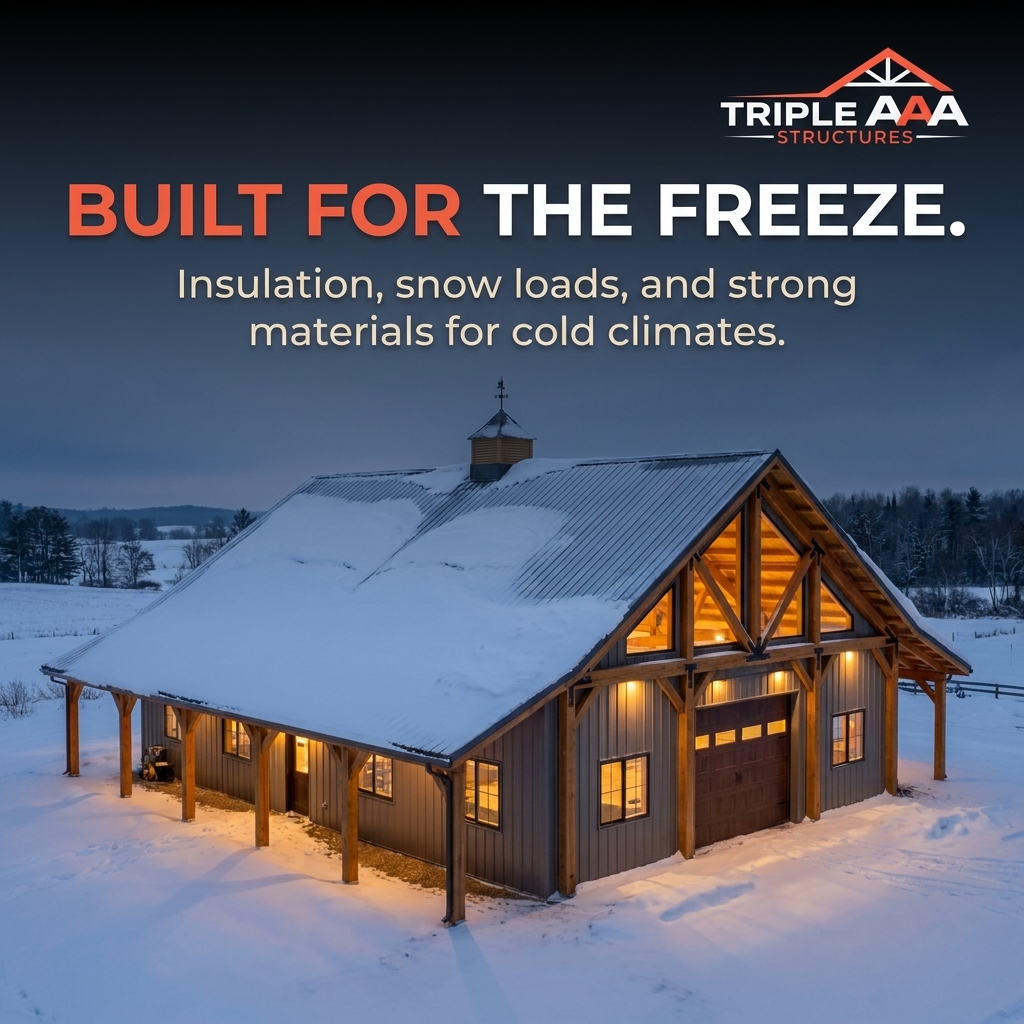
A well-built structure is more than just a roof and walls. It’s a complete system designed to handle whatever the weather throws at it. For cold climates, that means focusing on a few key things.
What a Cold-Climate Post-Frame Building Really Needs
If you're talking to a builder, they should be bringing these things up. If they aren't, you might be talking to the wrong crew. A building that’s truly built to last in the cold will have these features handled, no question.
1. Serious Insulation
The large wall cavities in post-frame construction are perfect for packing in high-quality insulation. This isn't just for comfort; it's about efficiency. Good insulation keeps your heating bills down and protects what's inside, whether it's equipment, livestock, or your family. We plan for a tight building envelope to make sure you’re not paying to heat the outdoors.
2. A Roof That Can Handle the Weight
Heavy, wet snow is no joke. Your building needs to be engineered for the specific snow load ratings in our area. That means the right trusses, the right spacing, and a solid structure that won’t buckle under pressure. We also recommend a steep enough roof pitch to help shed snow naturally, which takes a lot of strain off the building.
3. Materials That Stand Up to Freeze-Thaw Cycles
Winter means a constant cycle of freezing and thawing. This process can wreak havoc on lesser materials. When water gets into small cracks and freezes, it expands. According to H2O Global News (2025), water expands by about 9% when it freezes, a force powerful enough to fracture concrete and other porous materials over time. That’s why we use durable materials and proper foundation techniques to prevent moisture from getting a foothold in the first place.
4. Smart Moisture and Ventilation Control
A warm building in a cold climate can create condensation, and moisture is the enemy of any structure. Proper ventilation and vapor barriers are critical. They keep the air circulating and prevent moisture from getting trapped in your walls and insulation, which can lead to rot and mold. It’s a small detail that makes a huge difference in how long your building lasts.
The Right Builder Makes All the Difference
You can have the best plans in the world, but they don't mean much without the right people putting it all together. The post-frame industry is looking pretty steady, with a recent survey from Rural Builder Magazine (2024) showing that over two-thirds of builders expect the business climate to improve or remain the same in 2024. That means you’ve got options, so it's important to choose a team that puts quality first.
Look for a local builder who understands the specific challenges of our weather, knows the local building codes without having to look them up, and takes pride in their work. You want someone who treats your project like it’s their own. At the end of the day, you need a strong, dependable building that gives you peace of mind year after year. No shortcuts, no surprises—just solid work.
Ready to Build Something That Lasts?
Tell us what you’re planning—we’ll give you a straight answer and a real quote.
Website: https://3a-structures.com/
Phone: (316) 680-4721
